


Hand Woven Trivets- Zera
Hand Woven Trivets- Zera
Low stock
Share
Couldn't load pickup availability
Our most popular patterns have now become trivets! We love these designs, which will look beautiful in your kitchen, on your dining room table or hanging on the wall. Mix and match with woven bowls and wall hangings for a striking and dynamic gallery wall. Each trivet begins with the gathering of forest grasses and large sisal leaves. Once the sisal fibers have been extracted from the leaf, cleaned, dyed, and dried, the artisans are ready to begin. The sisal fibers are threaded around and around a core of forest grasses, the design taking shape bit by bit. In the end, you have a beautiful and useful addition to your dinner table. Enjoy Natural Neutral Collection trivets in 100% natural white and tea-dyed fibers. Hand woven trivets also make a lovely housewarming gift. Made by skilled and determined women! Celebrate your love for people, resilience and beauty with our artisan-made home décor and gifts. Azizi Life is committed to loving, fair trade, ethical relationships. A portion of profit is donated to benefit our community impact projects.
The Handcrafted Details - Woven from natural sisal fibers threaded over a core of locally-gathered forest grasses. The tea color is created when the sisal fibers are steeped in Rwandan tea leaves! We’ve attached a loop on the back for hanging your trivet up.
Diameter: 9 inches
Care: Wipe with a damp cloth in the direction of the sisal fibers. Dab stains with a damp, soapy cloth. Do not rub.
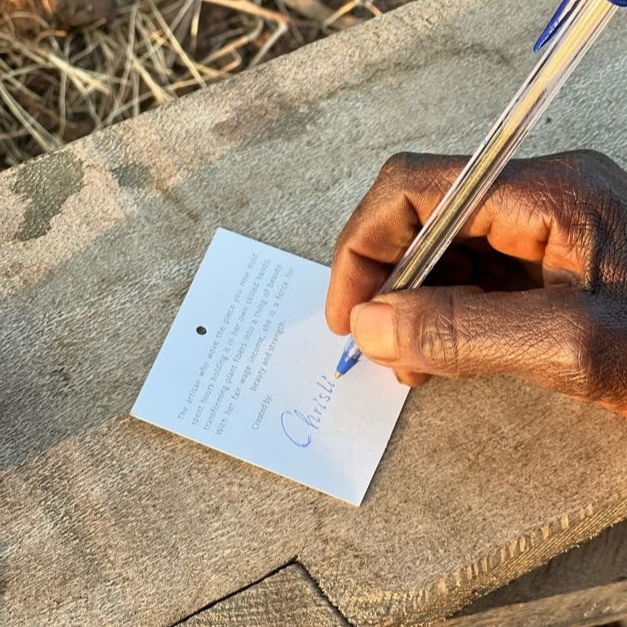
Note: Azizi Life goods are crafted from natural and locally-available raw materials. As such, each product is unique and may vary slightly in size or shade of color. Woven products exposed to sun or water may fade or become more malleable with time. - Ethically crafted by a person in rural Rwanda. - Includes a beautiful tag with the name of the artisan and their cooperative. Perfect for gift-giving—this special touch makes your purchase even more meaningful.
Azizi Life is a member of the Fair Trade Federation and committed to fair trade principles. Every product supports our community impact projects.
Azizi Life | Fair Trade | Handmade in Rwanda
Azizi Life’s vision is to participate in local initiatives for the development of Rwandan communities, working towards physical and spiritual wholeness for all.
Across the hills of Rwanda, groups of rural artisans are working to bring hope to their families through skillfully handcrafted goods. Azizi Life partners with over 60 independent groups- a total of over 760 artisan partners. Rising from the horrors of genocide, artisans from all backgrounds have joined together once again through their craft. Each artisan cooperative specializes in hand crafting products using specific techniques and raw materials. Azizi Life is honored to partner with these women and men, collaborating to connect makers, designers, and customers around the world.
Azizi Life is committed to paying an agreed-upon fair wage to the artisans as soon as we receive their products. The additional income from the sale of their art allows the craftspeople & their families to afford many things that they struggled to get before:
Medical insurance – improving health
School materials for their children – improving education
Soap and other cleaning products – improving hygiene
A more balanced diet – improving nutrition
Farm animals that multiply for income and provide manure – improving resources, soil quality and crop yield
Financial independence- improving relationships with spouses and neighbors
Having the money available to invest in these kinds of things provides a real sense of security and hope for the future for the artisan and her whole family.
Many of the women with whom we are working have told us how isolated they felt before they joined an art cooperative. Now as they meet with others regularly, they have the opportunity to discuss their problems and provide support for each other. As the ladies sit together to weave or do some other artistic endeavor, they use the time to talk about all manner of things, from best farming practices to child rearing. It is a time when they are able to find mutual support and friendship which previously they did not have time for, as they worked full time in the fields and in their homes.
In one community, this level of closeness is used to even bring reconciliation between the victims and perpetrators of the tragic events of 1994 (the Rwandan Genocide).


Strong. Think. Sturdy. Beautiful. Remember the teachers as these are a gift in themselves.
- 5 stars: 1 (100%)
- 4 stars: 0 (0%)
- 3 stars: 0 (0%)
- 2 stars: 0 (0%)
- 1 star: 0 (0%)
Strong. Think. Sturdy. Beautiful. Remember the teachers as these are a gift in themselves.